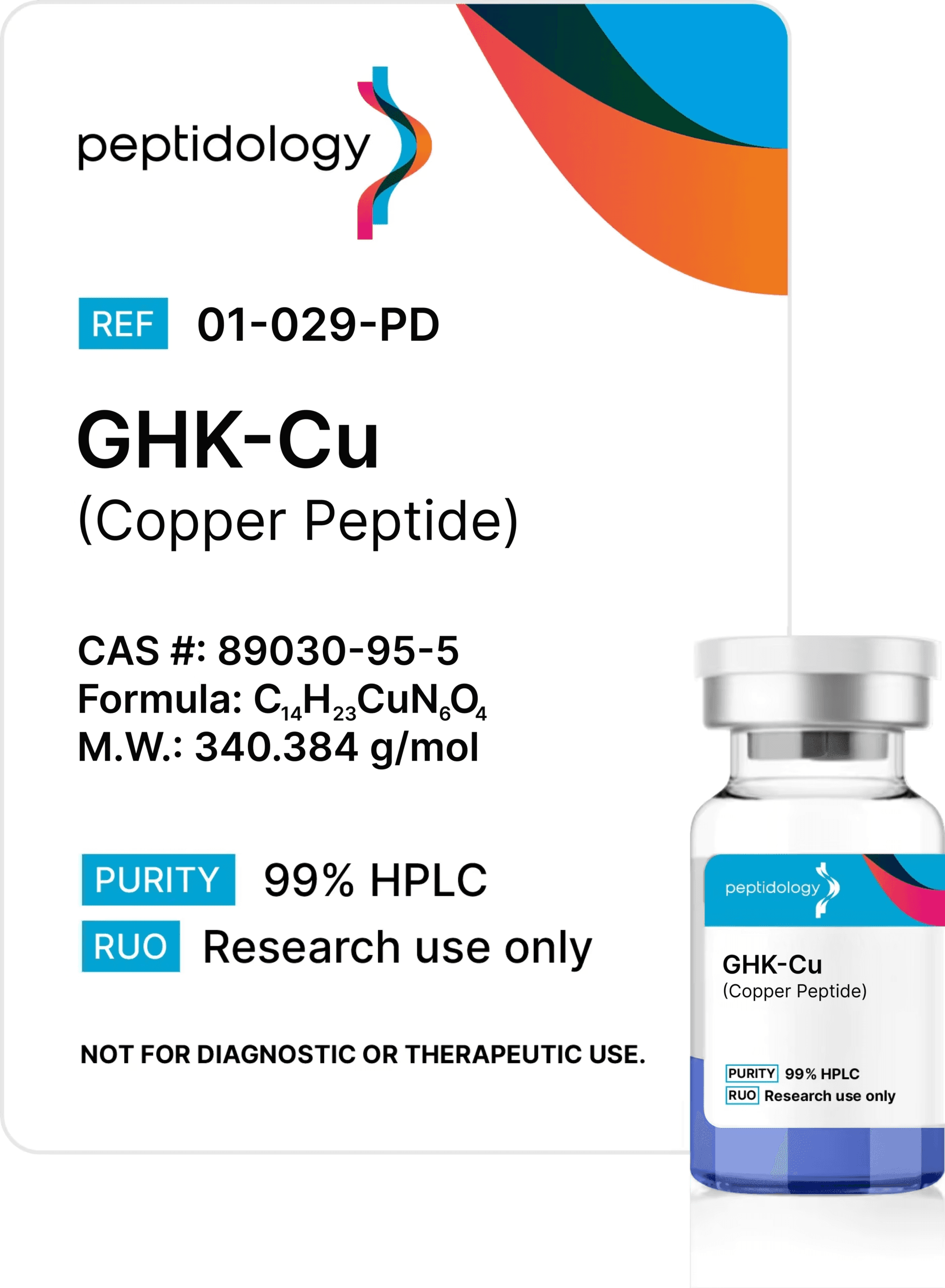
PEPTIDOLOGY GHK-Cu Copper Peptide 100 mg is presented as a copper-binding tripeptide material intended exclusively for controlled professional laboratory research. GHK refers to the amino-acid sequence glycyl-L-histidyl-L-lysine, which can form a coordinated complex with copper ions known as GHK-Cu. Scientific investigations have examined this complex in relation to copper transport, cellular communication, extracellular matrix activity, oxidative-response pathways, and experimental tissue-remodeling mechanisms. The stated 100 mg represents the total listed product amount and must not be interpreted as a human dose, administration recommendation, verified concentration, or treatment protocol. This material is not presented as an approved medicine, injectable preparation, dietary supplement, finished cosmetic product, or veterinary preparation.
The Science of GHK-Cu Research
GHK-Cu combines a naturally occurring tripeptide sequence with copper, an essential trace element that participates in multiple enzymatic and cellular processes. Research interest centers on how the peptide may bind and transport copper while influencing signaling pathways involved in extracellular matrix regulation and cellular responses. Experimental interpretation depends on compound identity, purity, model selection, concentration, exposure conditions, analytical methods, and appropriate controls.
Copper-Binding Activity: The histidine-containing GHK sequence can coordinate copper ions, creating the GHK-Cu complex. This property makes the compound relevant to studies investigating peptide-mediated copper handling and the biological availability of copper within controlled experimental systems.
Extracellular Matrix Signaling: Published research has examined GHK-Cu in relation to collagen, glycosaminoglycans, proteoglycans, and matrix-remodeling enzymes. These findings support continued laboratory investigation but must not be converted into guaranteed cosmetic, regenerative, or therapeutic claims.
Cellular Stress Research: GHK-Cu has also been studied in experimental models involving oxidative and inflammatory signaling. The significance of these observations remains dependent on the research model and does not establish clinical effectiveness, consumer safety, or suitability for personal use.
Review published scientific research concerning GHK and GHK-Cu.
Key Research Features of PEPTIDOLOGY GHK-Cu 100 mg
- Copper-Peptide Identity: Presented as the copper complex of the GHK tripeptide.
- Matrix Research Relevance: Associated with extracellular matrix and collagen investigations.
- Cellular Signaling Profile: Relevant to controlled oxidative-response and peptide-signaling studies.
- 100 mg Research Amount: Provides a stated quantity for laboratory inventory planning.
- Strict Research Classification: Intended exclusively for controlled non-clinical research.
Browse our complete range of peptide research materials.
Specifications
Brand: PEPTIDOLOGY
Product Type: Research Peptide
Category: Copper Peptide Research Material
Form: Not provided
Size: 100 mg
Strength: 100 mg stated total product amount
Active Ingredients: GHK-Cu
Ingredient Form: Copper complex of glycyl-L-histidyl-L-lysine
Use Target: Controlled copper-peptide and cellular-signaling research
Warnings: Not intended for human or veterinary use
Research Handling Guide
This material should be received, documented, stored, and handled only by trained laboratory personnel operating under an approved institutional research protocol. Before beginning an experiment, review the supplier’s certificate of analysis, batch information, identity-testing documentation, analytical purity method, copper-content data, safety data sheet, storage requirements, and handling instructions. Researchers should use appropriate controls, calibrated equipment, validated analytical procedures, and institutional chemical-hygiene practices. No human dosage, injection, ingestion, topical application, cosmetic formulation, reconstitution, compounding, or self-experimentation instructions are provided or implied by this product listing.
Safety Information
GHK-Cu must not be presented as an approved medicine, injectable therapy, finished cosmetic product, or dietary supplement based solely on this research listing. This material is not intended for human consumption, clinical administration, veterinary use, diagnostic procedures, household use, or direct application to the skin. Do not ingest, inject, inhale, or apply the material to the body. The FDA has identified potential immunogenicity concerns involving compounded injectable GHK-Cu due to peptide aggregation and peptide-related impurities, with limited human safety data available. Laboratory personnel should use suitable protective equipment and follow verified procedures for storage, spill response, transportation, exposure management, and waste disposal.
Frequently Asked Questions
What is GHK-Cu?
GHK-Cu is a complex formed when the tripeptide glycyl-L-histidyl-L-lysine binds copper. It is studied in relation to copper transport, cellular signaling, extracellular matrix activity, and experimental tissue-remodeling pathways.
What type of research is GHK-Cu associated with?
It is associated with laboratory investigations involving copper-binding activity, extracellular matrix signaling, collagen-related pathways, oxidative responses, and cellular communication.
Does 100 mg represent a recommended dose?
No. The 100 mg figure represents the stated total product amount only. It is not a human dose, topical concentration, injection amount, treatment schedule, or verified formulation strength.
Can this material be injected or applied directly to the skin?
No human injection, topical-use, cosmetic-formulation, or administration guidance is provided. Any laboratory preparation must follow verified supplier documentation and an approved institutional research protocol.


 Click to zoom